

Tonight
When it gets dark, how much the Moon will wash out the sky, and what's worth stepping outside for.
The Sun, Moon, planets, stars, meteor showers and satellite passes, all calculated for where you're standing. Everything runs on your phone.
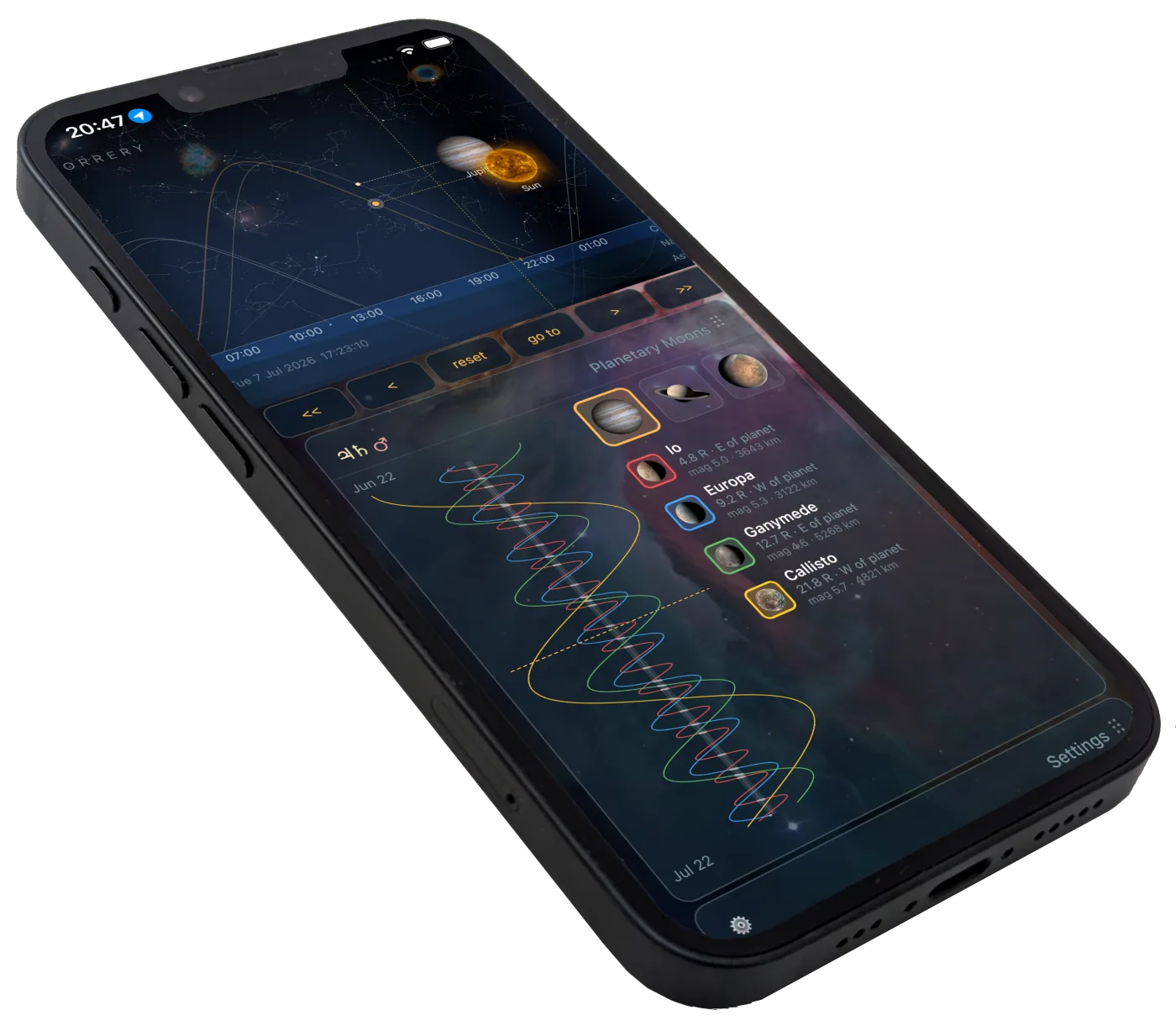
Reading the sky
The chart at the top of the app shows everything above your horizon, hour by hour.
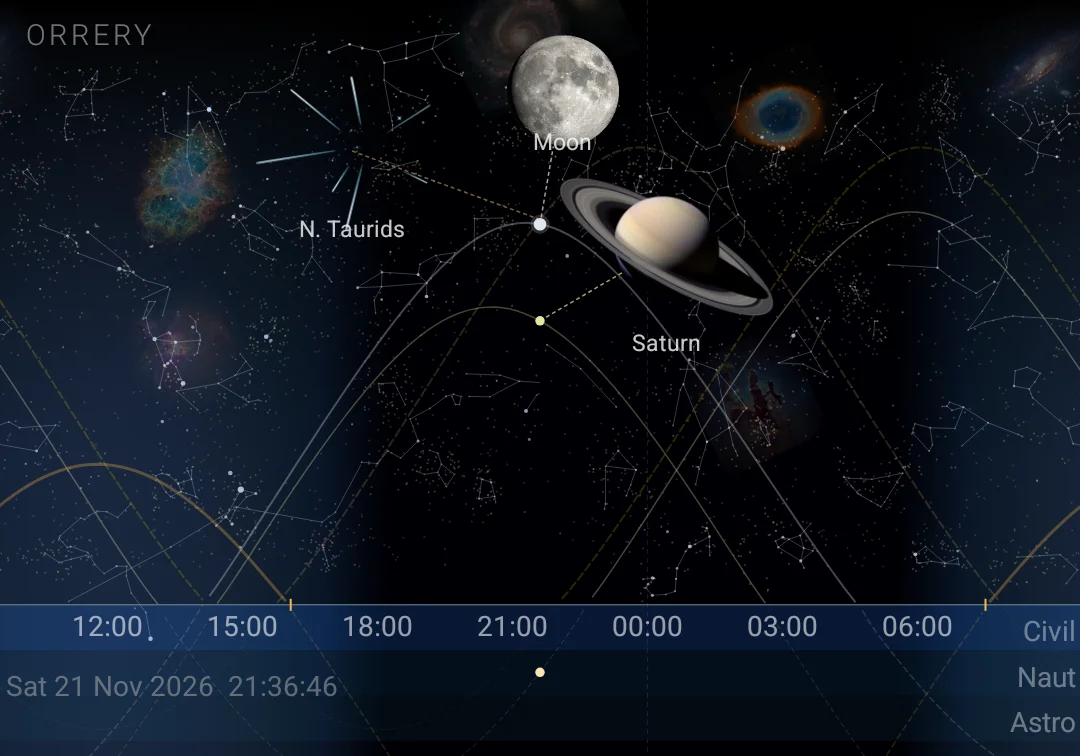
It rises on the left, is highest in the middle, and sets on the right.
Anything above it is up in the sky. Near the edges means low down, probably behind trees.
Drag to move through hours, days or months. Pinch to zoom.
Constellations, galaxies, nebulae and meteor radiants sit where they really are.
What's inside
Below the chart are cards full of detail. Open one to go deeper.
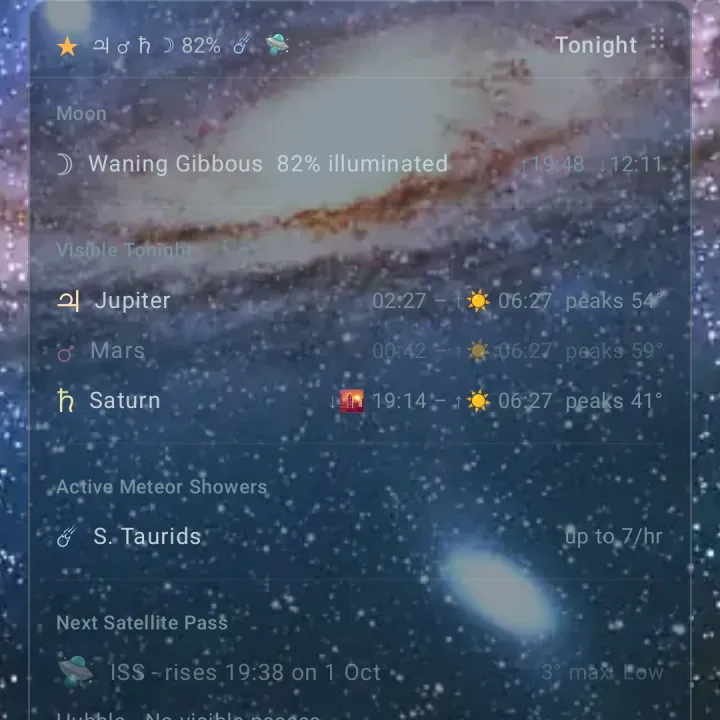
When it gets dark, how much the Moon will wash out the sky, and what's worth stepping outside for.
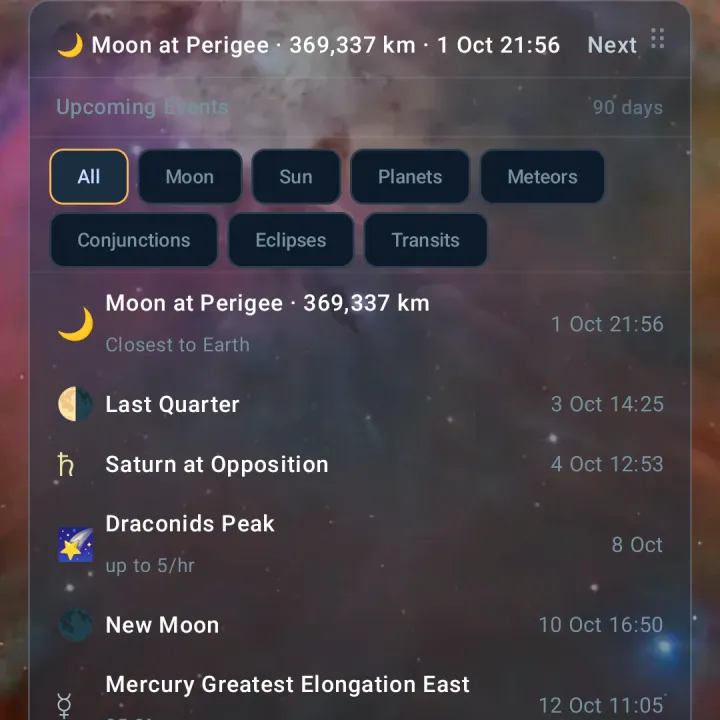
Rises, sets, conjunctions, meteor peaks and satellite passes, in order. Tap one to jump the chart to it.
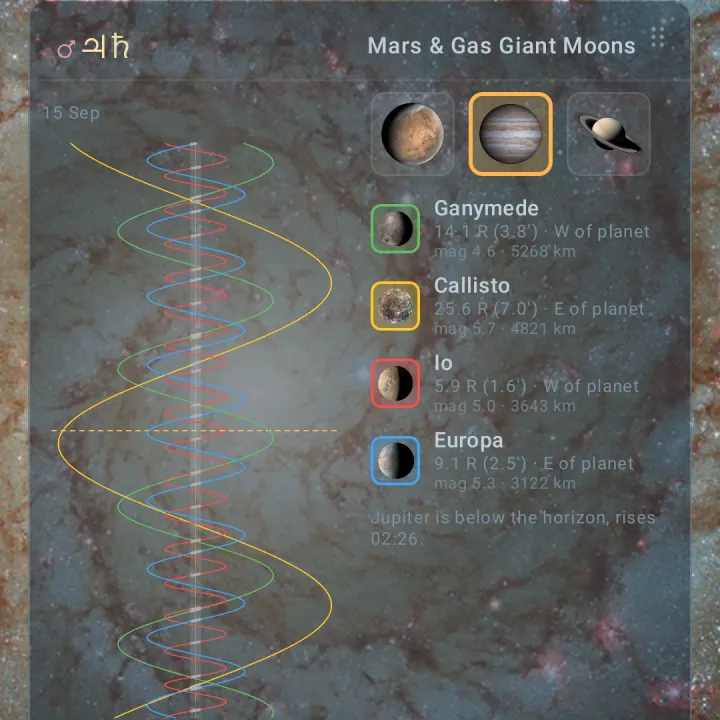
The shifting line-up of Jupiter's four big moons, the one a pair of binoculars shows.
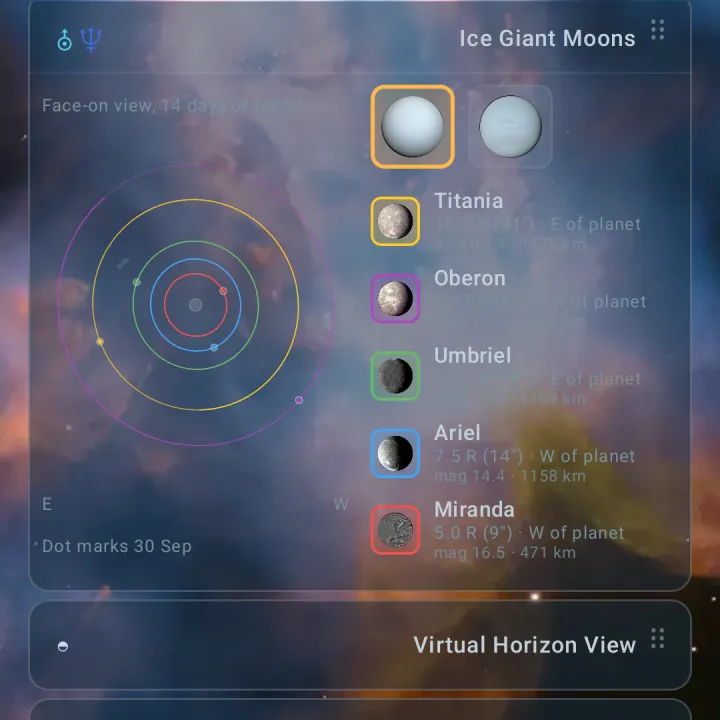
The brighter moons of Uranus and Neptune, for bigger telescopes.
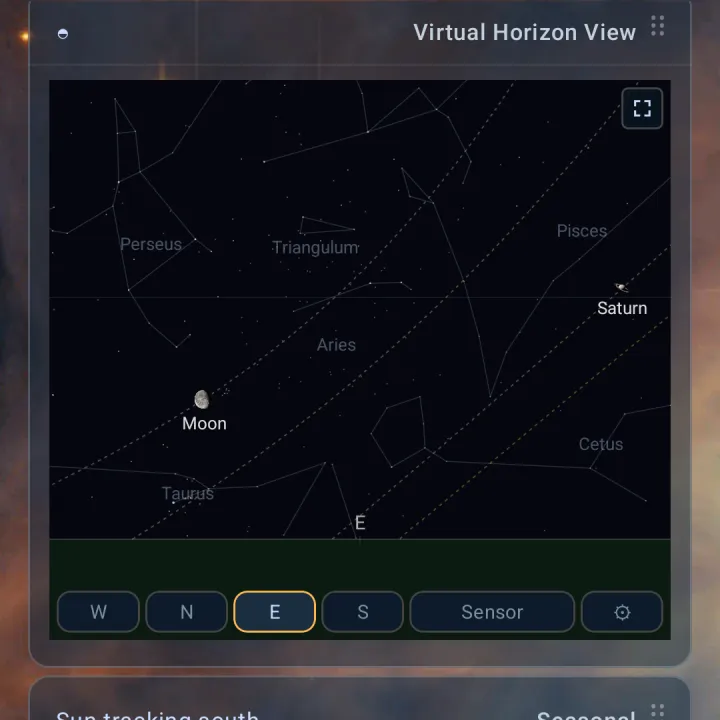
The sky from where you stand. Drag to look around, or point your phone at the sky.
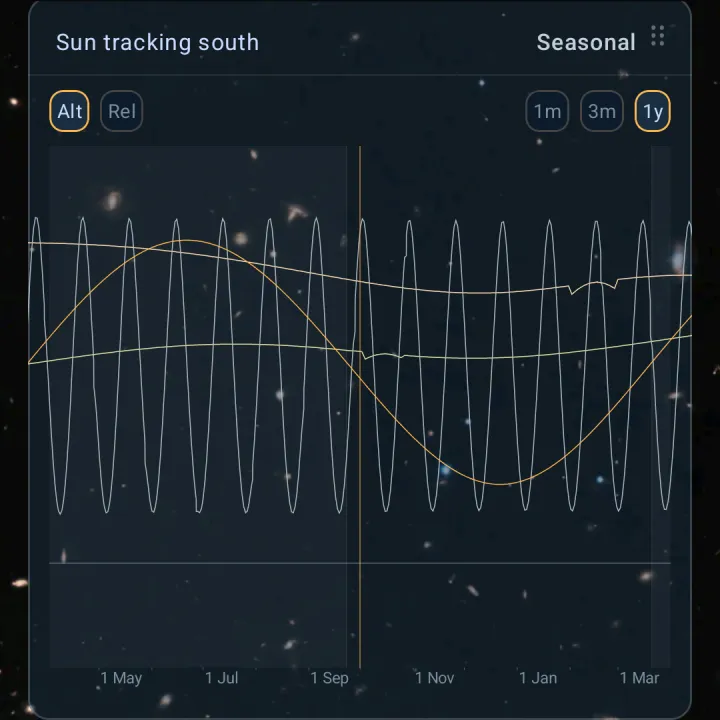
A whole year at a glance: how high each object climbs, day by day.
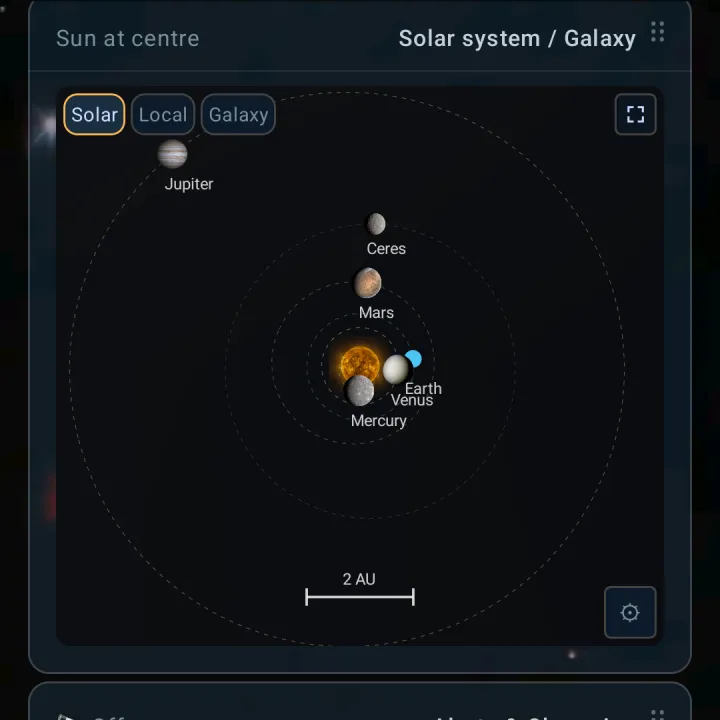
The planets on their orbits, turning as you move through time. Keep zooming out to reach the stars.
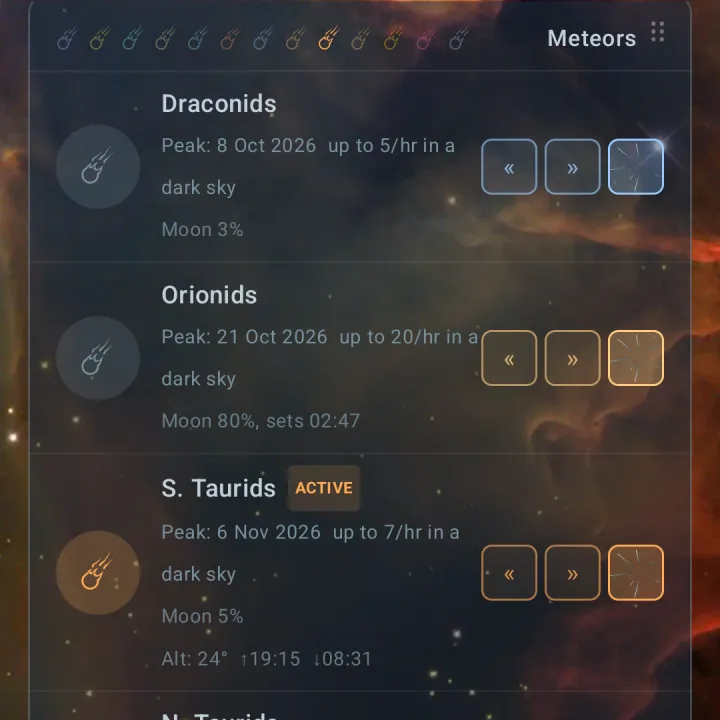
Active and upcoming showers, peak rates, and whether the Moon will spoil them.
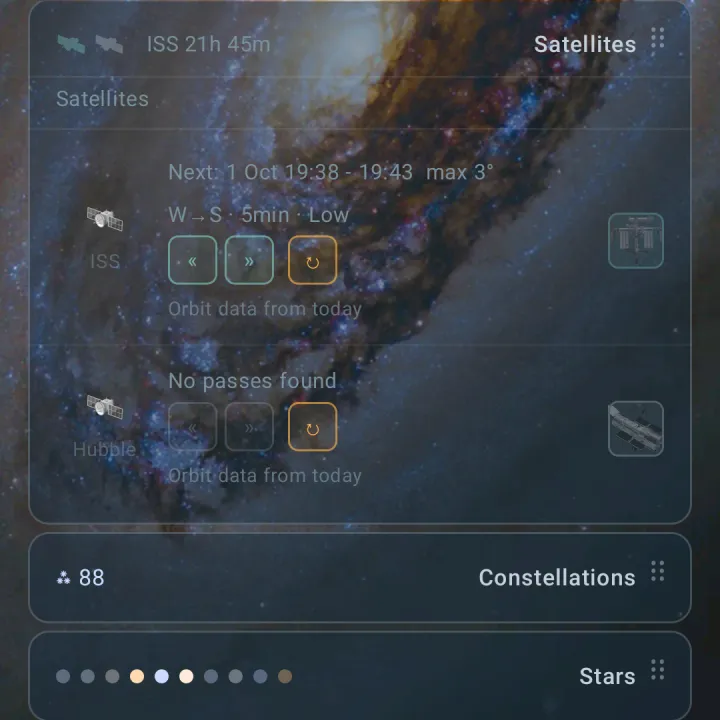
Visible passes of the ISS, Hubble and other satellites over you.
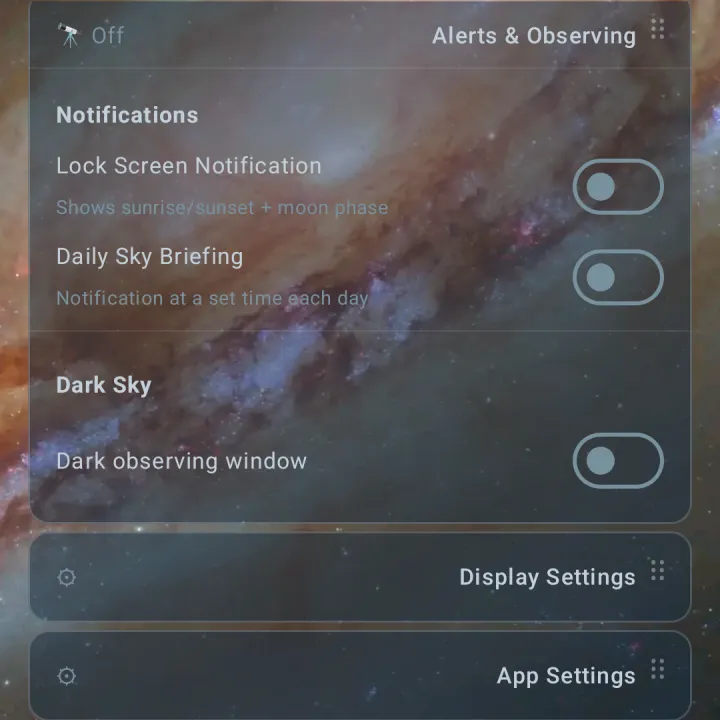
A daily sky briefing at a time you choose, and a heads-up when the dark observing window opens.
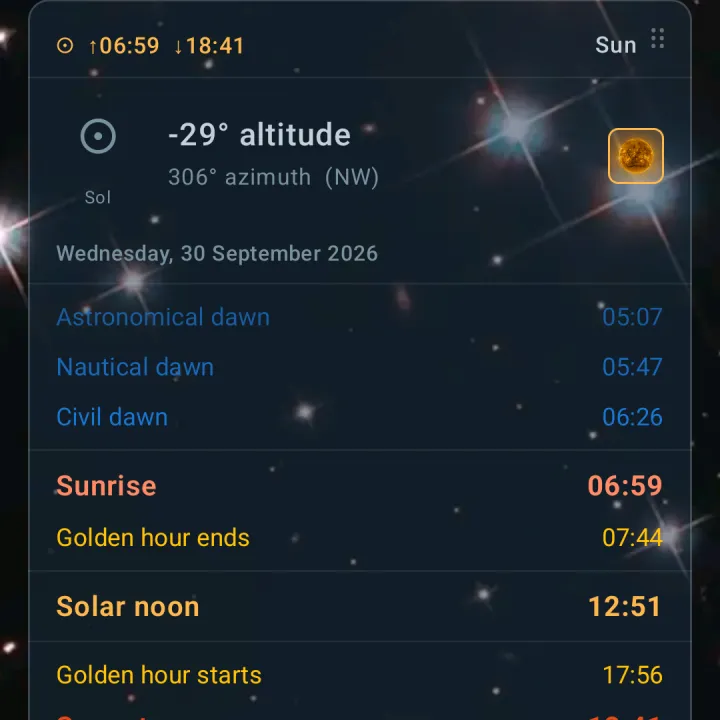
Sunrise, noon and sunset, plus the twilight stages that tell you when it's truly dark.
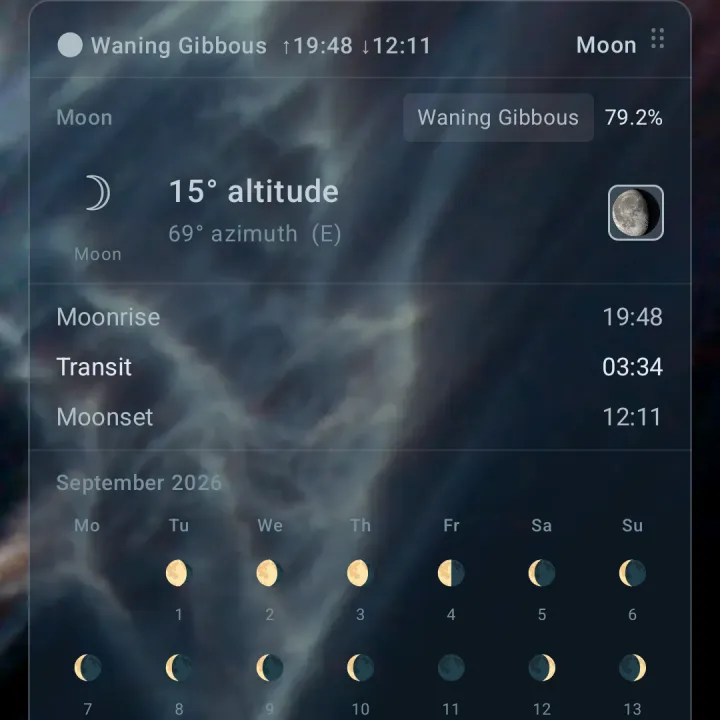
Phase, illumination, and rise and set times. The biggest single influence on what you'll see.
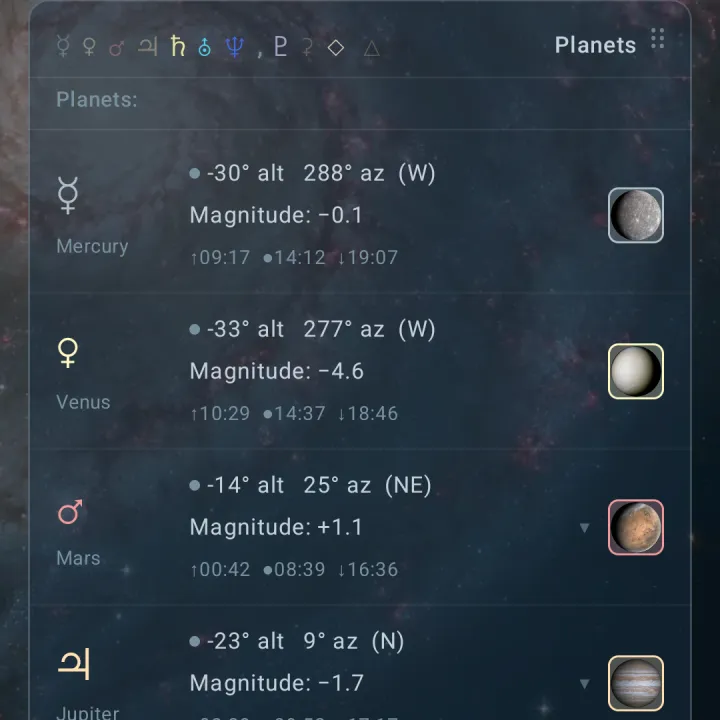
Mercury to Neptune and the dwarf planets, with brightness and rise and set times.
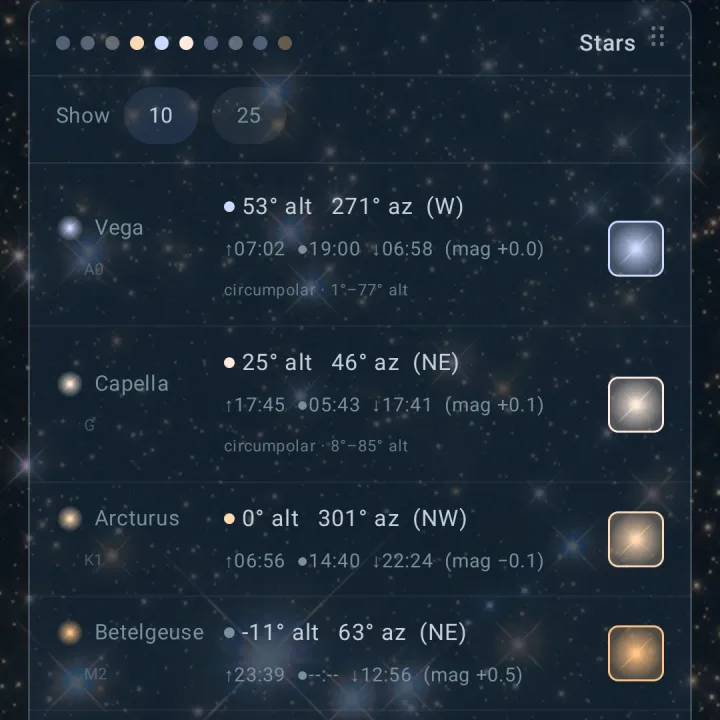
The brightest named stars, and when each one is up.
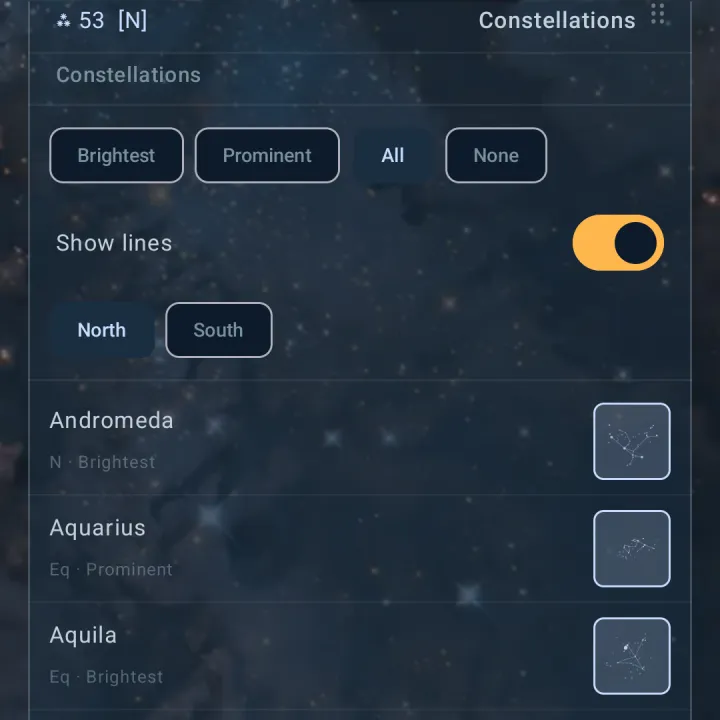
All 88 figures drawn behind the chart, or just the ones you pick.
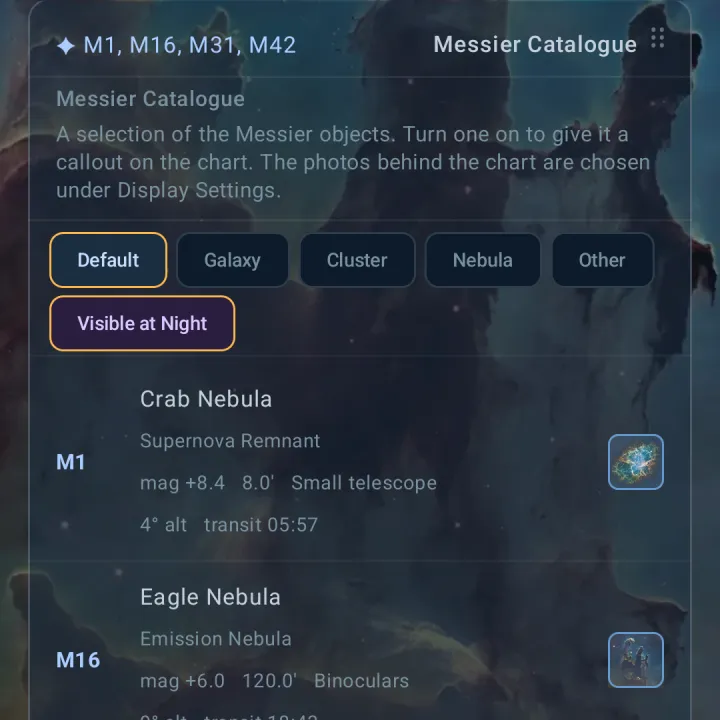
Galaxies, nebulae and clusters, each with a photo, and which ones rise where you live.
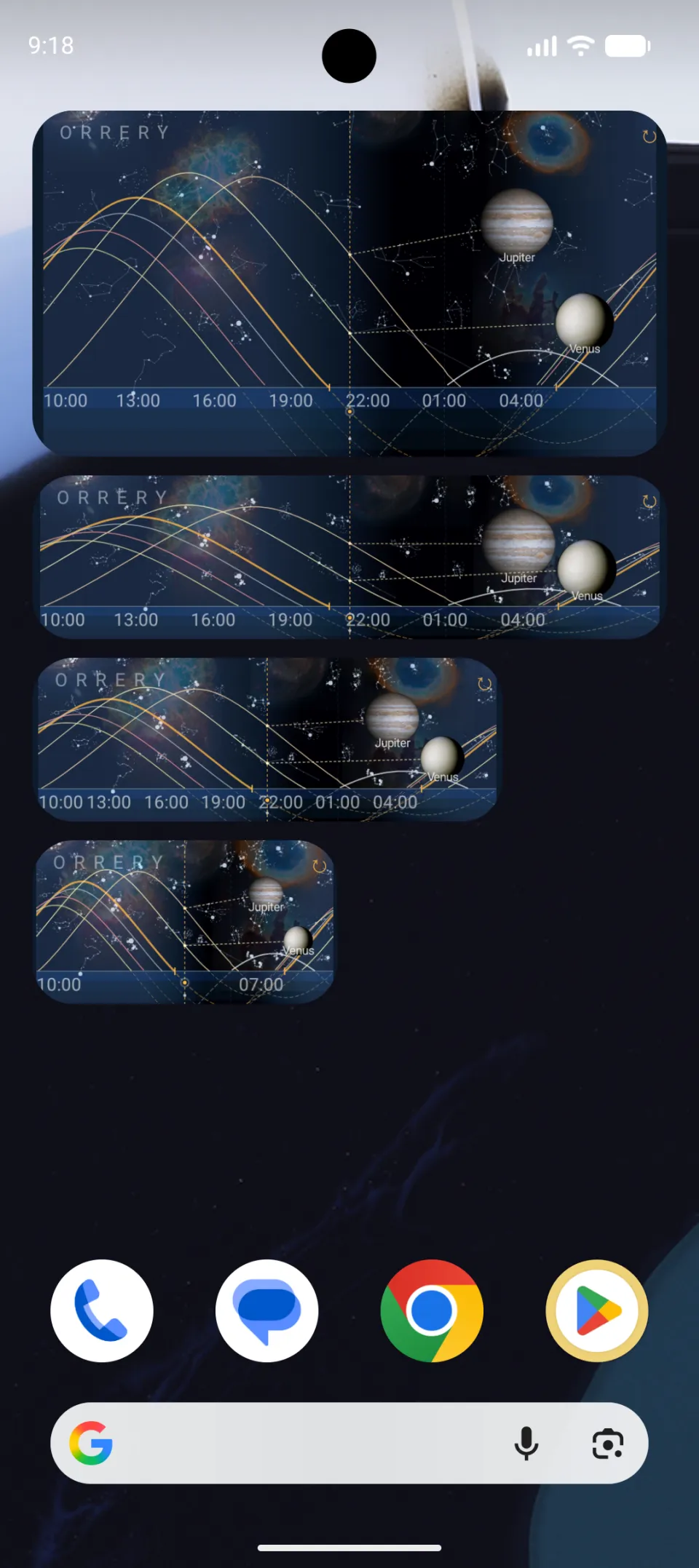
Home screen widgets
The live chart as a widget on Android and iPhone, from a small square to full width.
Set each widget up its own way. They refresh on their own without draining your battery.
Why "Orrery"? An orrery was a clockwork model of the solar system, its planets turning on brass arms so that early astronomers could see where everything sat and where it was heading.
Free to download, with more to unlock. No account needed.